I love all things medical. Today, if you choose to read this strange post, you will be learning about MRSA! WOOOO!
********
A nosocomial infection is simply a hospital-acquired infection: AKA an infection you get while in the hospital.
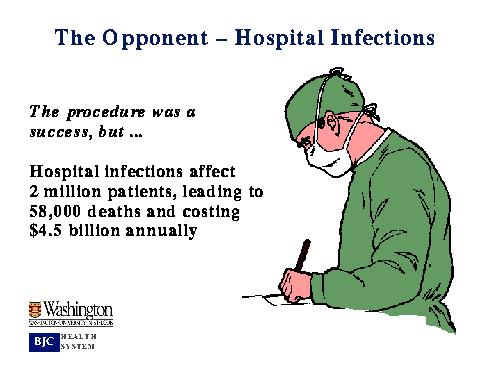 Though MRSA isn’t always acquired in the hospital, it typically is.
So, what is “MRSA”? It is also known as Methicillin Resistant Staphylococcus aureus.

(Source: http://ilovebacteria.com/mrsa.htm)
MRSA can cause: skin, bloodstream, and surgical wound infections as well as pneumonia.
MRSA can be found in: healthy people (especially hospital workers) colonizing the: skin, nose, & throat.
 Transmission: Direct physical contact (person to person). The main mode of transmission is via the HANDS. You can also acquire MRSA from contact with an infected patient, contact with your own colonized body sites, and if you come in contact with items contaminated with fluids containing MRSA. (Such objects include: towels, sheets, wound dressings, clothes, and workout equipment)
*********
Pretty much every hospital has TONS of MRSA all over it. It usually affects the elderly, very sick, those with open wounds, and people who have a tube going into their body. (Example: ventilator or catheter)
Sadly, MRSA is now present in the community. (Also known as Community-Acquired MRSA or CAMRSA) Half of all CAMRSA patients were between the ages of 4 and 19 years. The risk factors for people to acquire CAMRSA are: those who live in prisons or crowded living conditions, IV drug users, players of close contact sports, and people who use athletic equipment at the gym. **CAMRSA is also now being seen in people with no risk factors… scary!**
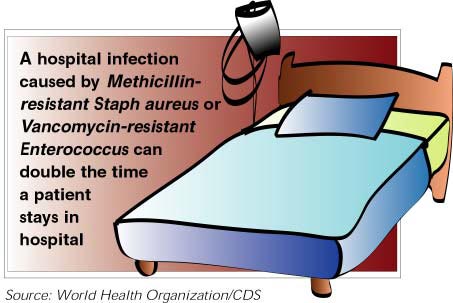 Other risk factors for MRSA:
-Prolonged hospital stay
-Receiving broad-spectrum antibiotics
-Being in an ICU or burn unit
-Recent surgery
-Interacting with other patients who have MRSA
*********
How you can stop the spread of MRSA: WASH YOUR HANDS & GYM EQUIPMENT, ETC!!
Treatment for MRSA: antibiotic Vancomycin
********
Okay… that helped me study for microbiology! I hope you learned something about MRSA and hospital acquired infections!
🙂
 Living My Full Life