H. pylori (Helicobacter pylori) is a common bacterial infection that affects the stomach lining—sometimes quietly, sometimes with severe symptoms like burning pain, bloating, and weight loss. Here’s how my journey unfolded.
I was diagnosed with an H. pylori infection in July 2012, and to this day I still get views on my posts about that time in my life. I figured it would be a good idea to create a sort of master post to detail my journey through H. pylori for anyone that finds my blog and is struggling with the infection. I hope this can give you valuable information and hope for recovery!
What is H. pylori?
According to WebMD, Helicobacter pylori (H. pylori) is a type of bacteria that can enter one’s body and live in the digestive tract. H. pylori can cause ulcers in the lining of the stomach or the upper part of the small intestine. For some people, an infection can lead to stomach cancer.
H. pylori can be contracted from food, water, or utensils. It’s more common in countries that lack clean water or good sewage systems. You can also pick up the bacteria through contact with the saliva or other body fluids of infected people.
My Symptoms and Diagnosis Journey
I have no idea how I was infected with H. pylori, but it was pretty rough. For months, I felt off. I struggled with a burning stomach pain, heartburn, bloating, weight loss, and bloody stools. Every time I ate, my stomach burned. I was popping antacids with every meal and literally looked a few months pregnant after I ate–no matter what I ate. My weight dropped lower and lower and at my worst, I was having diarrhea with blood.
Enough was enough. I knew something wasn’t right, so I went to my primary care doctor and shared all my symptoms and struggles. The doctor thought maybe I had Celiac disease and decided to order a few blood tests. When the tests came back, my doctor called to let me know that my blood test revealed that I had H.pylori.
H. py-what?, I thought. I had never even heard of this infection but it all made sense. This bacteria had completely wrecked my stomach and intestines, causing the digestive symptoms I was experiencing. Once I found out what was causing this health issue, it was just the beginning of my healing journey.
My doctor decided to treat my H. pylori infection with a strong medication called PrevPac. I thought H. pylori was hard to deal with, but I was in for a new challenge: dealing with the side effects of PrevPac.
Treatment: PrevPac and Endoscopy
Once I was diagnosed with H. pylori, my doctor immediately prescribed me a triple therapy medication called PrevPac. Each day of the triple therapy medication protocol I took eight pills; four in the morning and four in the evening.
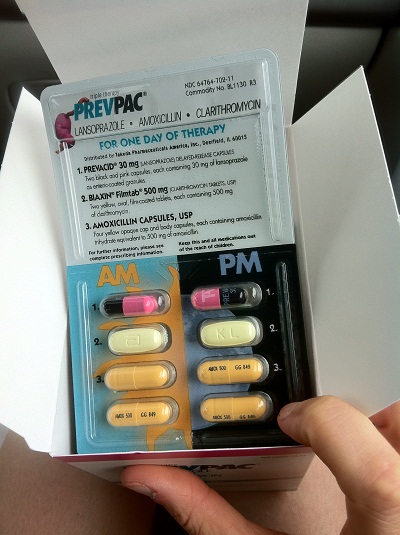
PrevPac includes a proton pump inhibitor (PPI), and two antibiotics. The PPI works to block acid production in the stomach, which can help existing ulcers heal. The antibiotics treat the infection by stopping the growth of bacteria.
I won’t lie, my experience with PrevPac wasn’t fun. After I started the treatment course, I felt like I was holding on by a thread. I had a lot of the common side effects such as nausea, a metallic taste in my mouth, and fatigue. The nausea was definitely the worst symptom to deal with. I just felt like I couldn’t function.

Not only did I feel nauseous, taste metal, and feel fatigued, I also felt like a zombie. I was just off. My doctor told me that many, many people just can’t finish the medication cycle because it’s so intense. She strongly encouraged me to push through to try and eradicate the infection.
I dutifully took PrevPac for two long weeks, and then visited a gastroenterologist who performed an endoscopy to biopsy parts of my esophagus, stomach, and duodenum to check if the infection was still present.
The endoscopy experience wasn’t bad at all. I visited an outpatient center, had an IV inserted, was put under anesthesia, and woke up about an hour later. The only side effects I had from the endoscopy were a sore throat and mild stomach pain from the doctor taking biopsies.

A week later, I found out that the biopsies tested negative for the infection, so the medication had worked! Unfortunately, I will always carry the antibodies for H. pylori. If you were to test my blood for H. pylori today, it would show up as positive for a presence of the bacteria. For this reason, I know that if I ever had symptoms crop up again, an endoscopy is the best way to truly diagnose H. pylori for those who have been infected previously.
Recovery
From the time of diagnosis until I was in the clear after my endoscopy was an intense time in my life. I felt pretty sick from the medication, but was urged to try and take it no matter what so my body didn’t build up a resistance to the antibiotics. It was honestly one of the hardest things I’ve done!
Thankfully, most ulcers and side effects of H. pylori usually heal after a few weeks of treatment. It took me several months to feel like myself again. Gradually, the burning sensation in my stomach, heartburn, bloody stools, and diarrhea resolved. I was finally able to put on weight and didn’t look bloated.
I know firsthand how hard it is to not feel like yourself–to struggle through this infection and then to deal with the side effects from the medication. Looking back, it was worth it for me to take the medication. I haven’t had a re-infection of H. pylori and feel great!
Long-Term Management
While I feel great, H. pylori still impacts how I take care of myself today. Because I don’t want another infection, there are a few things I do:
- I generally try to avoid NSAIDs such as Ibuprofen, Aspirin, Naproxen, etc. because they can damage the lining of the stomach.
- I take a probiotic daily for gut health.
- Along with a daily probiotic, I try to regularly eat fermented foods like kimchi to promote gut health.
- Because H. pylori caused me to have bloody stools for months on end, I became anemic. A daily liquid iron supplement is gentle on the stomach and can help restore iron levels. I have found this brand to be effective.
Past Blog Posts On My H. pylori Infection
While H.pylori is awful, it is treatable! I now know what an H. pylori infection feels like, and wouldn’t hesitate to be tested and treated again. If you suspect you’re dealing with it, I would highly recommend talking with your doctor about testing. If you have any questions about H. pylori, feel free to leave a comment.
 Living My Full Life